Why Clients Quit Your Group Program (And The Fix)
A client who finishes your program tells their friends. A client who quits partway through just goes quiet, and you never hear from them again unless it is to complain.
Most of us treat that quiet drop-off as an annoyance. It is not. It is your cheapest, most abundant client acquisition channel, leaking, and it is the quietest leak in the whole business because the people who quit do not complain. They stop showing up, and they never send you anyone. You feel it two quarters later, when the referrals you were counting on do not arrive, and nothing on any report tells you why.
“People finishing the process and getting the results, that is your cheapest, most abundant client acquisition process.”
– Joy Houston
Ready for a smarter path to better clients? 
You Are Responsible To Your Clients, Not For Them
Here is the line worth sitting with: you are responsible to your clients, not for your clients. Your job is to hand them a protocol or a process that works, and to make it as easy as possible to follow it from step one to the step where they get the result they paid for. What they do with it after that is theirs.
But that does not mean their drop-off is only their problem. Humans will always find a reason to let themselves off the hook at the hardest step in your process. The question worth asking is not why they quit. It is where.
The Bridge My Client Built Over The Gluten Chasm
When Joy was working with JJ Virgin's team on the Virgin Diet launch, the pattern was obvious once they looked for it. The book asked people to cut seven foods. Most people could drop six of them without much of a fight. Then they hit the seventh, usually gluten, sometimes cheese, and the excuses arrived on schedule: it is in the Bible, it is a way to live off the animal without killing it, generations of people have eaten this way.
None of that was really about bread or cheese. It was about hitting the one step in the process that felt hardest, and looking for a reason to stop.
JJ's team did not lecture people out of their excuses. They built a bridge instead: an extra guide with tastier swaps for the exact foods people were refusing to give up, plus a holiday version for Christmas cookies and cinnamon rolls. The chasm did not get smaller. The bridge just got built, and people who used to fall off that step started crossing it instead.
Individual results from any health or wellness program vary from person to person; this is one program's account of its own process, not a promise of a specific outcome.
Joy's Own Drop-Off Point Was Never The Content
Joy's version of the same problem showed up in her own group programs, and it was not about food. It was about video. Anyone who has made the move from one-to-one to one-to-many coaching knows the tradeoff: a cheaper price point in exchange for video instead of live time. Clients would watch a lesson, pause, do the work, come back, and pause again. None of that is wrong on its own. It is the price of affordable access to real expertise.
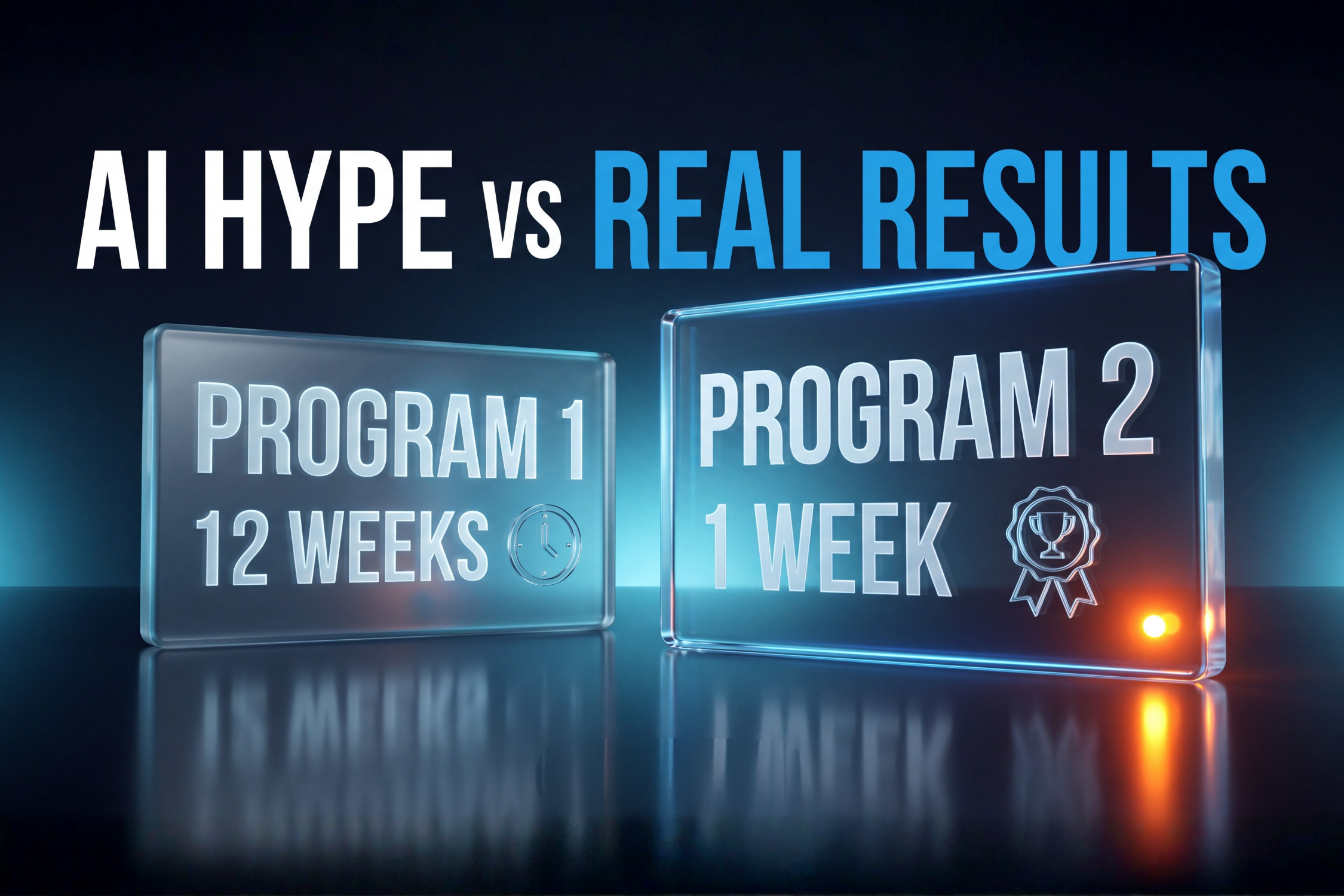
The problem showed up in one specific place: Protocol to Program, her twelve-week process that walks a practitioner through turning their own protocol into a sellable group offer. Concept, curriculum, modules, sales page, promotions, all of it. Some people powered through in one sitting. Most people stalled somewhere in the middle, and the complaint was almost always some version of “I do not have time to watch all of these videos.”
What Replaced The Videos
Here is the part worth stealing for your own business. Joy did not write a new set of videos. She took the recordings and transcripts she already had, the same content that was sitting inside her member portal, and fed it into an AI tool to build something new: an interactive intake session built in her own voice.
Instead of watching her explain a concept, the client answers a series of questions, the same questions Joy would ask them live, in the same order she would ask them, with coaching and pushback built into every answer. Her own team started calling it Joy AI as a joke, because it argued back exactly like she would. By the end of the session, the client is not holding a checkmark that says they finished a module. They are holding an asset: their offer concept, their curriculum, their sales page copy, their promotional emails, already built from their own answers.
What used to take twelve weeks of watching now takes some clients one weekend. She still keeps a short video with timestamps sitting next to the AI session, so anyone who wants to see an example answer or hear the reasoning behind a question can jump straight to that moment instead of rewatching the whole thing.
How To Implement This In Your Own Program
Pick one module in your own process, the one where you already know people stall. Assemble everything you already have about that specific step: any guide, any video, any blog post, anything you have said about it on a podcast. Feed that into an AI tool and ask it to build an interactive intake that asks the questions you would ask, in the order you would ask them, and hands your client something they keep at the end.
Do not try to replace your whole program in one pass. Start with the one module that is actually bleeding people, build the bridge for that one step, and watch what happens to completion there before you touch anything else.
If your process touches health, wellness, or medical information in any way, add a plain disclaimer to whatever tool you build: it supports the client through this specific step, and it does not replace medical care or medical advice.
Key Takeaways
- Completion is a marketing number, not a support number. A client who finishes refers you; a client who quits goes quiet and never does.
- Your clients did not buy videos. They bought the result, and every video is one more step between them and it.
- Find the one module where people actually drop off before you try to fix your whole process.
- An AI intake built on your own content and voice can replace the video for that one step without replacing you. DM me on Instagram @realjoyhouston the word “INTAKE”, and I'll send you the link.
- Start with the module that is already costing you the most, not the one that is easiest to rebuild.
Your Move This Week
You already know which module in your process is the one people quit at. You have watched it happen more than once. This week, pull together everything you have ever said about that specific step and see what you can build from it. Simple scales, complex fails, and version one of a fix you actually ship beats a perfect one you never build.
If you want a hand thinking through where your own process is leaking, or want to see how this fits inside a done-for-you system instead of a pile of separate tools, Map To Millions membership is where that conversation starts.
This article and the video it is drawn from describe one business's own process and results. They are not a guarantee of results for any other business or program.
Ready To Fix The Drop-Off?
If you can already see where clients are getting stuck but you are not quite sure what to change first, I put the process into a simple, free 3-Step Action Plan you can use to work through it.
It will help you:
- Find the friction – pinpoint the step in your program where clients are most likely to stall or disappear.
- Build the bridge – decide what you can change, simplify, or replace to make implementation easier.
- Measure the change – know what to watch so you can tell whether your fix is actually improving completion.
You do not need to rebuild your entire program. You need to fix the place where people stop.
Start with one friction point. Build one better bridge. Get more people to the result they came for.
Ready to take that first step now?